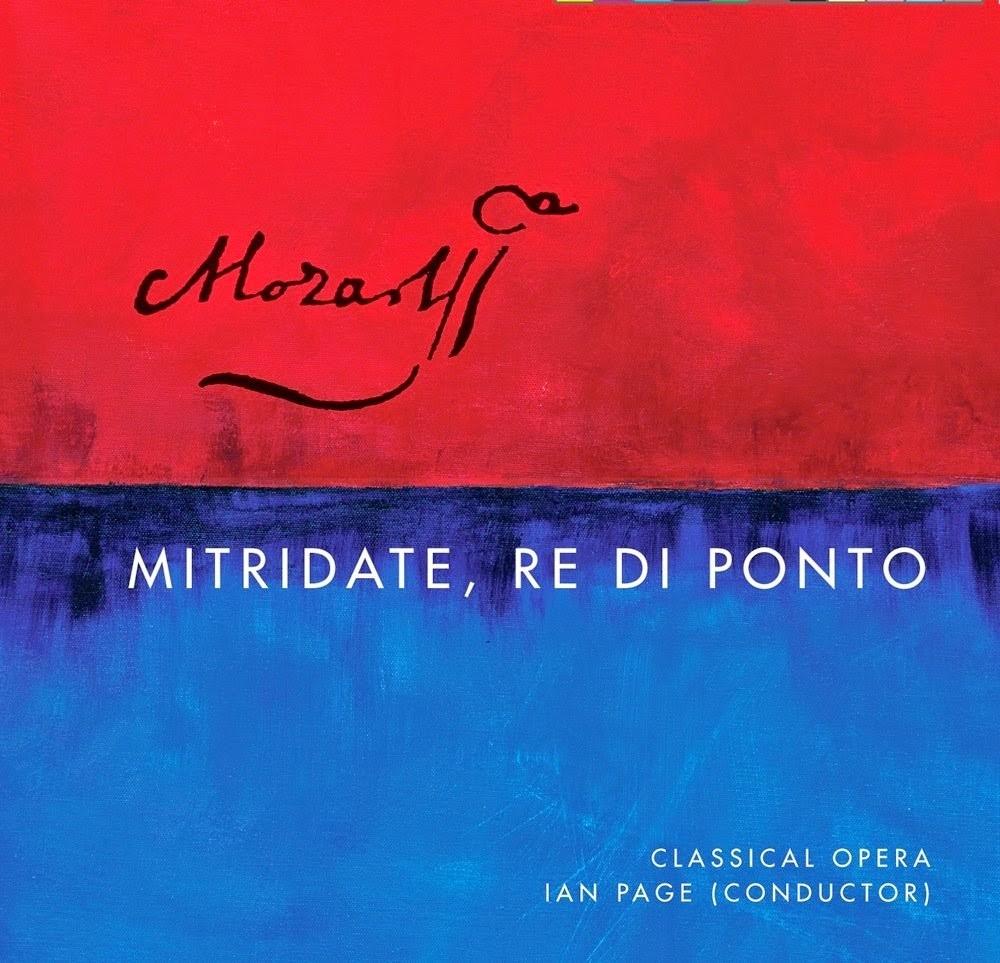
Mozart: Mitridate, re di Ponto
£24.00
PRESTO: Recordings of the Year
GRAMOPHONE
Mitridate, re di Ponto was premièred at the Teatro Regio Ducale in Milan on 26 December 1770. It marked the culmination of Mozart’s first trip to Italy, and represented the first great operatic success for a composer still a month short of his fifteenth birthday. The work received an initial run of twenty-two performances – sure proof of its success – and news quickly spread of the child’s astonishing work.
But the preparations for the opera had been far from smooth. The idea of Milan’s opera season opening with a work by a fourteen-year-old German attracted widespread suspicion – even more on account of his nationality, it seems, than his age – and many of the original cast insisted that Mozart rewrite their arias to their own specifications and wishes. He was too young and inexperienced to stand his ground (a decade later he was quite able to defend himself against similar intrigues when writing Idomeneo), and so he complied with their demands. Mozart’s eight jettisoned numbers (seven arias and a duet) have all survived, though, and this is the first recording of Mitridate to include all of these original settings as well as the final versions.
Background
Between December 1769 and January 1773 Mozart travelled to Italy three times. On each occasion he was accompanied by his father Leopold, and each visit culminated in the completion and first performance of a new opera for the Teatro Regio Ducale in Milan – Mitridate, re di Ponto in 1770, Ascanio in Alba in 1771, and finally Lucio Silla in 1772. These trips were also of considerable educational importance, for as well as meeting some of the foremost composers of the day, including Hasse, Piccinni and Jommelli, Mozart was also able to attend a large number of operas, including works by such composers as Paisiello, Guglielmi, Valentini and Pugnani.
After his ‘Grand Tour’ of 1763-6, which incorporated extended stays in Paris and London, and two visits to Vienna, the second of which saw the composition of La finta semplice and Bastien und Bastienne, Mozart was already a seasoned traveller; indeed, during the ten formative years between the ages of seven and seventeen he was to spend less than three years in total at home in Salzburg. While the second and third visits to Italy were of relatively short duration, the first trip was an extensive tour lasting for more than fifteen months, and included triumphant performances in Verona, Mantua, Milan, Bologna, Florence, Rome and Naples.
Italy was still very much the centre of the operatic world, and a composer’s education was not considered complete until he had spent time there; Handel, Gluck and Johann Christian Bach had all studied opera in Italy in their youth, and Archbishop Schrattenbach, the Mozarts’ employer in Salzburg, had already sent several of his court musicians there to further their studies, so that they might then be better equipped to increase the quality of Salzburg’s musical life. Schrattenbach was quick to recognise Mozart’s potential to enhance the reputation of Salzburg abroad, and in November 1769 he made the departing father and son an extravagant gift of 600 florins and bestowed on the thirteen-year-old Wolfgang the title of ‘Konzertmeister’. The post was to be unpaid until such time as the young composer returned to his duties in Salzburg, but the appointment was a politic move not only to increase Mozart’s reputation in Italy but also to retain his loyalty and allegiance to Salzburg.
The commission
Wolfgang and his father arrived in Italy just before Christmas 1769, passing through Rovereto, Verona, Mantua and Cremona before arriving in Milan on 23 January 1770. At the time Italy was not a unified nation but a series of separate states, many of which were under Austrian rule, and although Milan was governed by Empress Maria Theresa’s son, Archduke Ferdinand, much of the power effectively rested with her viceroy in Northern Italy, Count Firmian. He was a respected patron of the arts, and as the director of the Teatro Regio Ducale, it was he who suggested that the young Wolfgang be invited to write the opening opera of Milan’s 1770-71 season. To offer such an important commission to such a young and inexperienced composer was bound to prompt suspicion and distrust, though, and so Firmian, by way of audition, set up a public concert for the young prodigy on 12 March; one hundred and fifty nobles were gathered for the occasion, and Mozart was required to compose three new arias to texts from Metastasio’s Demofoonte to prove his credentials.
He clearly passed with flying colours, for three days later he and his father left Milan with the new contract safely secured. Over the next seven months they spent time in Bologna, where Wolfgang studied composition and counterpoint with the great pedagogue Padre Martini, in Florence, where Mozart’s father was mesmerised by the beauty of the city and its surroundings, in Rome, where Wolfgang reportedly wrote out Allegri’s Miserere from memory after hearing a performance in the Sistine Chapel, and in Naples, from where they visited Pompeii, which had only started to be excavated as recently as 1755. Meanwhile Pope Clement XIV made Wolfgang a ‘Knight of the Golden Order’, a higher rank than that which had previously been awarded to Gluck.
The libretto
Leopold wrote from Rome in June 1770 that Mozart’s new opera for Milan was to be a setting of Metastasio’s La Nitteti, but a few weeks later, on 27 July, Mozart received official notification that he was to set Mitridate, re di Ponto, based on a superb tragedy by Racine. The libretto, adapted by Vittorio Cigna-Santi from an Italian translation of the original French play, had already been set by the composer Quirino Gasparini for performance in Turin in 1767, and this provided a degree of security for the authorities – presumably they had in the back of their minds that if Mozart’s setting proved insufficiently accomplished they could always replace it with Gasparini’s Mitridate, a perfectly respectable work which had not been heard before in Milan.
The title character is based on the real-life King Mithridates VI (c.120 – 63 BC), also known as Mithridates Eupator or Mithridates the Great, who was famed for his military defiance of the Romans (he engaged in three extensive wars against them, lasting for a total of almost twenty years) and for his cultivation of an antidote to poison. According to Pliny the Elder’s account he could speak the languages of all the twenty-two nations that he governed, and his son Pharnaces led a rebellion that caused his eventual demise. Racine, though, was far less concerned with historical accuracy than the emotional tensions and conflicts between a father and two sons who all love the same woman.
Cigna-Santi’s adaption removes two minor characters from Racine’s cast, but adds the roles of Ismene and Marzio. It also introduces Farnace’s final transformation, thereby ensuring the happy ending that was virtually obligatory for opera seria (Racine’s Pharnaces had remained unrepentant at the end of the play, fleeing with the defeated Romans).
Composition and first performance
If Leopold Mozart’s letters are to be believed Wolfgang did not start work on Mitridate until 29 September, when he and his father were in Bologna, and after he returned to Milan on 18 October he wrote home to his mother: “I cannot write much for my fingers ache badly from composing no end of recitative.” This reflects the standard procedure of the time, whereby the composer wrote all of the recitatives, followed by any choruses and ensembles, before embarking on the arias; these were made to measure, like a good suit, once the composer had met and started working with the singers.
The role of Mitridate was to be sung by the tenor Guglielmo d’Ettore, who had created the title role in Gasparini’s setting three years earlier, and that of Aspasia by the acclaimed soprano Antonia Bernasconi; the roles of Sifare and Farnace, Mitridate’s two sons, were taken by two castrati, Pietro Benedetti and Giuseppe Cicognani. Ismene and Marzio were sung by Anna Francesca Varese and Gasparo Bassano respectively, and the Arbate was a third castrato, Pietro Muschietti (being an opera seria, this was the first of Mozart’s stage works to employ castrati). As was the custom of the day, the singers assembled in Milan gradually (the less well-known singers first, because their time was less expensive, although Bernasconi was already in Milan and so started working with Mozart earlier).
The process was not without its trials, however. Understandably excited to have earned such an important commission, it seems that Mozart had already written several of the arias before getting together with the cast, and the singers – no doubt wary of his inexperience and eager to assert their own authority – insisted on various rewrites. Guglielmo d’Ettore proved particularly troublesome and hard to please – four different sketches survive for Mitridate’s opening aria, “Se di lauri il crine adorno”, each quite different from the final version. He seems to have been suffering at the time from severe vocal limitations, which Mozart’s music needed to conceal or avoid, and indeed he was to die the following year at a mere thirty-one years of age. He also rejected Mozart’s setting of Mitridate’s final aria, “Vado incontro al fato estremo”, replacing it with Gasparini’s version, and the collaboration was clearly not a happy one for the young composer; Leopold Mozart, when writing to his son several years later, offered him the following advice: “You must not allow any envious persons to get the better of you or upset you. It happens everywhere – think only of Italy, of your first opera there, of d’Ettore”.
But d’Ettore was not the only cast member who proved problematic. An anonymous enemy, perhaps part of the inevitable faction that believed a German had no place writing operas for Italy, soon tried to persuade the prima donna Bernasconi to insert Gasparini’s arias into the new score, and all five of the singers who had more than one aria required rewrites. Wolfgang seems to have been a model of patience, and Bernasconi was entirely won over by the music he wrote for her, but as the first performance approached he and his father continued to fear cries of “troppo tedesco” (“too German”).
In the event, however, the opera’s première was a major triumph, and a thrilled Leopold wrote home: “God be praised, the first performance of the opera took place on the 26th and won general applause; and two things that have never happened before in Milan occurred. Firstly, contrary to all the customs of a first night, an aria of the prima donna was encored . . . and secondly, after almost all the arias there was extraordinary applause and cries of ‘Viva il Maestro! Viva il Maestrino!’”.
The music
Throughout his operatic career Mozart displayed an unerring ability to create music of a scale and ambition commensurate with the occasion for which it was written. The Teatro Regio Ducale was a large and magnificent venue, and the opening of the opera season a prestigious social occasion. Despite all the tribulations, the cast was of a considerably higher quality than any he had previously worked with, as was the libretto, thanks mainly to the noble beauty and searing intensity of Racine’s original play. The orchestra too was larger than any he had so far written for – Leopold Mozart specified fifty-six players for the première of Mitridate – and this is reflected in the breadth and dynamism of the orchestral writing.
The vocal writing is of course full of the brilliance and virtuosity which was de rigeur for Milanese audiences, particularly in the opening arias and duet for Aspasia and Sifare, but the most remarkable and memorable elements of the score are the arias which mark the emotional peaks of the story, such as Sifare’s poignant “Lungi da te, mio bene”, Aspasia’s soulful “Pallid’ ombre” and Farnace’s final, redemptive “Già dagli occhi il velo è tolto”. In these the fourteen-year-old composer already transcends the very models he is trying to emulate, and taps into a depth and resonance of human experience which is staggering in one so young.
The original arias
No other opera by Mozart has as many different versions, sketches, fragments and variants of the individual numbers as Mitridate. In total, seven arias and a duet survive in original versions which were jettisoned or adapted before the first performance, and of these, six survive complete (or, in the case of “Lungi da te”, almost complete). It was perhaps inevitable that the original cast should have been suspicious of a fourteen-year-old foreigner who had never before written an opera seria, but their reasons for demanding these rewrites often seem to reflect practical considerations and, in some cases, their own vanity rather than any qualitative judgement on the music.
No. 1, “Al destin che la minaccia” (Aspasia)
Mozart’s original setting of this aria is in G major, the key in which the preceding recitative ends. It successfully combines Aspasia’s high-status dignity and plaintive vulnerability, but it is perhaps understandable that Antonia Bernasconi – already an established prima donna who three years earlier had created the title role in Gluck’s Alceste – might want a more festively virtuosic vehicle for the opening aria of the opera. By writing the final setting in C major Mozart was able to add a pair of trumpets, which bring a more regal splendour to the sound-world, and Bernasconi must surely have been satisfied with the results.
No. 8, “Se di lauri il crine adorno” (Mitridate)
This was the aria that caused Mozart the most problems, mainly due to the cantankerous demands of the tenor Guglielmo d’Ettore. Four sketches, in three different keys, survive, of which this F major setting is the most complete. It contains all of the vocal line except the last couple of bars, the bass line until the end of the ‘B’ section, violin parts for the four-bar introduction and four short violin cues (of one or two bars’ duration each) between the vocal phrases.
From this relatively sparse material the late and much missed Mozart scholar Stanley Sadie fleshed out an extremely accomplished and idiomatic completion of the aria, skilfully extending the violins’ triplet figuration from the opening and adding the standard pairs of oboes and horns to the orchestration. I had the privilege of conducting the first performance of this completion, and a few years later I incorporated it into a staged production of the opera. In returning to it for this recording I took the liberty of making several tiny cosmetic changes, mainly in the accompanying violin figurations and once or twice in the lapping oboe parts. These changes probably ended up totalling several dozen in number, but are almost all, I hope and suspect, imperceptible; all of the real work is Stanley’s, and any credit is due entirely to him.
No. 9, “In faccia all’oggetto” (Ismene)
Mozart’s initial setting of Ismene’s first aria is scored for oboes, horns, trumpets and strings. The use of trumpets is particularly surprising, given the key of B flat major and the sense of uneasy disappointment in Ismene’s situation, but they bring a wonderfully mellow and burnished sound to the aria. The three-in-a-bar metre is also a little unexpected, but again brings a quirkily wistful quality to the dramatic situation. Mozart’s final version of the aria is altogether more orthodox, scored for strings only and reverting to a four-in-a-bar metre. It establishes Ismene’s vocal credentials more impressively, to be sure, but perhaps at the expense of a more original and insightful characterisation.
No. 13, “Lungi da te, mio bene” (Sifare)
Mozart’s first setting of Sifare’s Act 2 aria, “Lungi da te”, shares many similarities with the final version. Pietro Benedetti, the original Sifare, was the last cast member to reach Milan – he had still not arrived by the beginning of December – and his arias would therefore have been among the last to be written; Mozart’s father wrote that Wolfgang “prefers awaiting his presence in order to fit the costume to the figure”. If the initial version of “Lungi da te” was not a perfect fit for Benedetti, it must have already been fairly comfortable; a second version inverts the melodic shape and varies numerous details, but without radically altering the colour or musical landscape of the original, while the third and final version retains the vocal line of this second version unchanged but adds an extended horn solo. This haunting addition, evocative of an alphorn calling from mountain-top to mountain-top, is a very different use of the instrument from that in Mozart’s subsequent horn concertos, and tellingly underlines the pathos of Sifare’s farewell to Aspasia as he prepares to go far away from her. The aria effectively becomes a double concerto, with the two solo lines interlinking like the two parting lovers.
Mozart’s manuscript of the original version breaks off at the end of the ‘B’ section, but it is a fairly straightforward task to create a completion using Mozart’s existing music – the corresponding place in the second version successfully achieves the harmonic link to the reprise, and I have abbreviated this recapitulation to bring it in line with other comparable arias in the opera.
No. 14, “Nel grave tormento” (Aspasia)
The final version of this aria is in ABAB form, a noble adagio leading into a brilliant allegro before both parts are repeated. The key is F major, and the orchestra includes pairs of flutes, oboes and horns. Mozart composed only the first adagio of his original version, which shares the same key and orchestration; presumably his prima donna was happy with the fiery allegro sections but felt that a new opening was required.
In creating a complete performing version of the original version, then, and to provide a context for Mozart’s enticing first draft, Stanley Sadie needed to create an entire recapitulation of the adagio, this time staying in the home key and modelling it closely on Mozart’s corresponding treatment of his material in the final version. Again, he did so with great skill, taste and good judgement.
No. 16, “Son reo; l’error confesso” (Farnace)
Giuseppe Cicognani, the original Sifare, can have had few complaints about the music that Mozart wrote for him, and the decision to rewrite this aria was probably Mozart’s own, founded on a need for greater economy and brevity within the context of the whole opera. Essentially the final version is a considerably shortened version of the original setting, sharing the same musical ideas but condensing them into a much more compact form. The original is perhaps a little repetitive, but is musically more substantial. Again, its scoring includes two trumpets, which are not used in the revision.
No. 18, Duet, “Se viver non degg’io” (Aspasia, Sifare)
The original version of this duet is very different from the final version in terms of key – E flat major as opposed to A major – and structure – the opening adagio is reprised, unlike in the final version, creating an ABAB structure. Mozart may have realised that Aspasia’s magnificent Act 3 aria, “Pallid’ ombre” was also in E flat major, or he may have been made aware of the tradition which Salieri referred to in his memoirs, that such a love duet should always be in A major. Either way, the original setting is a wonderful piece, albeit longer and even more difficult than the final version; indeed, the fiendish challenges of the vocal writing may well have been cause enough for the singers to insist on a rewrite.
No. 20, “Vado incontro al fato estremo” (Mitridate)
Mozart only wrote one setting of Mitridate’s final aria, but in the event d’Ettore insisted on singing Gasparini’s setting anyway. Mozart conceded to his wishes – he probably had little choice by this stage – and as a result the published aria was until very recently thought to be Mozart’s own. In truth, though, Gasparini’s setting does not suffer too badly by comparison with Mozart’s, and it serves as a telling reminder that Mozart’s genius evolved from a musical language that was already highly developed and finely tuned to the dramatic requirements of opera seria.
© Ian Page, 2014
Classical Opera: Making of Mitridate from TallWall Media on Vimeo.
The opera is set in the royal port of Nymphaea, in the Crimea, in c.63 BC. Mitridate is the King of Pontus, a Hellenic kingdom on the southern shores of the Black Sea, and has been engaged in battle against the Roman General Pompei. He has left his elder son Farnace in command of Pontus while his younger son Sifare watches over the Caucasian outpost of Colchis. News has now spread, though, that Mitridate has been killed in battle during a heavy defeat to the Romans, and both sons have abandoned their duties to come to Nymphaea, where Mitridate’s fiancée Aspasia has been awaiting his return.
Act One
The town square of Nymphaea
Arbate, the city’s governor, welcomes Sifare to Nymphaea. Sifare expresses concern that Farnace is already there, and confides to Arbate that both brothers are in love with Aspasia; furthermore, Farnace is suspected of being in league with the Romans. Aspasia rushes in and asks Sifare to shield her from Farnace’s aggressive advances; Encouraged that Aspasia has turned to him for support, Sifare declares his love and vows to protect her.
The Temple of Venus
Aspasia repels Farnace’s lustful pursuit of her, and when he threatens violence Sifare arrives to defend her. Just as the brothers are about to come to blows, Arbate brings news that Mitridate is alive and well, and is approaching the city. Farnace fails to persuade Sifare to unite with him against their father, but they agree to keep quiet about their rivalry for Aspasia. When Sifare leaves, Farnace conspires with the Roman tribune Marzio to salvage his plan to assume the throne.
The port of Nymphaea
Mitridate arrives with his fleet and comes ashore, defeated but proud. To Farnace’s dismay he has brought with him Ismene, daughter of the King of Parthia and Farnace’s promised bride; Ismene is disconcerted by Farnace’s cold attitude towards her. Mitridate orders his two sons to escort Ismene to the royal palace. Meanwhile he explains to Arbate that he himself had spread the news of his death to test his sons’ loyalty. Arbate informs him that Farnace has made improper advances to Aspasia, but claims that Sifare has displayed no feelings towards her. Mitridate is greatly relieved that his favoured son has seemingly shown himself to be worthy, but vows revenge on Farnace.
Act Two
The royal apartments
Farnace tells Ismene that he no longer loves her, and warns her that if she appeals to Mitridate she may regret the consequences; by now, though, Mitridate believes that Sifare would make a more suitable husband for her.
Mitridate tells Aspasia that he wants to marry her immediately. When she hesitates he accuses her of being in love with Farnace; he summons Sifare to deal with the treachery. Left alone, Sifare and Aspasia declare their love for each other, but duty and honour dictate that they must suppress it.
Mitridate’s camp
Mitridate exposes Farnace as a traitor. Farnace confesses his alliance with the Romans, but betrays Sifare’s love for Aspasia. Mitridate tricks Aspasia into confessing her feelings for Sifare, and furiously condemns her and both of his sons to death. Sifare and Aspasia resolve to die together.
Act Three
The hanging gardens
Ismene begs Mitridate to be merciful. He offers to spare Aspasia if she will return to him, but she angrily rejects him and prepares to die. Mitridate, meanwhile, receives news that the Romans are laying siege to the city walls, and he sets off to fight them. Sifare, who has been rescued by Ismene, now rescues Aspasia and departs to fight by his father’s side.
The interior of a tower adjoining the walls of Nymphaea
During the Roman attack Marzio helps Farnace to escape, but Farnace renounces his previous ambitions, joining the battle but then setting fire to the Roman fleet.
A hall adjoining a grand courtyard in the palace of Nymphaea
Mitridate is carried in, having mortally wounded himself rather than surrendering to the Romans. Before he dies he is reconciled with his sons; he unites Aspasia with Sifare and forgives Farnace, who is in turn reconciled with Ismene.
|
CD1
|
|
|
| Overture | ||
| 1 | Allegro | 2’03 |
| 2 | Andante grazioso | 1’48 |
| 3 | Presto | 1’23 |
| ATTO PRIMO | ||
| Scena I | ||
| 4 | Recitativo: “Vieni Signor” (Arbate, Sifare) | 1’49 |
| Scena II | ||
| 5 | Recitativo: “Se a me s’unisce Arbate” (Sifare, Aspasia) | 2’40 |
| 6 | No. 1, Aria: “Al destin, che la minaccia” (Aspasia) | 6’04 |
| Scena III | ||
| 7 | Recitativo accompagnato: “Qual tumulto nell’alma” (Sifare) | 1’06 |
| 8 | No. 2, Aria: “Soffre il mio cor con pace” (Sifare) | 7’35 |
| Scena IV | ||
| 9 | Recitativo: “Oh giorno di dolore!” (Aspasia, Sifare) | 1’22 |
| Scena V | ||
| 10 | Recitativo: “Ferma, o germano” (Sifare, Farnace, Aspasia) | 0’48 |
| Scena VI | ||
| 11 | Recitativo: “All’ire freno, Principi, olà” (Arbate, Sifare, Farnace) | 0’33 |
| 12 | No. 3, Aria: “L’odio nel cor frenate” (Arbate) | 3’42 |
| Scena VII | ||
| 13 | Recitativo: “Principe, che facemmol” (Farnace, Sifare, Aspasia) | 0’13 |
| 14 | No. 4, Aria: “Nel sen mi palpita” (Aspasia) | 2’22 |
| Scena VIII | ||
| 15 | Recitativo: “Un tale addio, germano” (Farnace, Sifare) | 1’10 |
| 16 | No. 5, Aria: “Parto: Nel gran cimento” (Sifare) | 3’57 |
|
Scena IX
|
||
| 17 |
Recitativo: “Eccovi in un momento sconvolti” (Farnace, Marzio)
|
1’01
|
| 18 | Recitativo: “Eccovi in un momento sconvolti” (Farnace, Marzio) | 7’14 |
| Scena X | ||
| 19 | No. 7, Marcia: Maestoso | 2’45 |
| 20 | No. 8, Cavata: “Se di lauri il crine adorno” (Mitridate) | 4’42 |
| 21 | Recitativo: “Tu mi rivedi, Arbate” (Mitridate, Ismene, Arbate) | 0’56 |
| Scena XI | ||
| 22 | Recitativo: “Su la temuta destra” (Sifare, Mitridate, Farnace, Ismene) | 2’06 |
| 23 | No. 9, Aria: “In faccia all’oggetto” (Ismene) | 5’45 |
|
Scena XII
|
||
| 24 |
Recitativo: “Teme Ismene a ragion” (Mitridate, Arbate)
|
2’29
|
| Scena XIII | ||
| 25 | Recitativo accompagnato: “Respira alfin, respira” (Mitridate) | 1’51 |
| 26 | No. 10, Aria: “Quel ribelle e quell’ingrato” (Mitridate) | 3’10 |
| CD2 | ||
| ATTO SECONDO | ||
|
Scena I
|
||
| 1 | Recitativo: “Questo è l’amor, Farnace” (Ismene, Farnace) | 1’55 |
| 2 | No. 11, Aria: “Va, l’error mio palesa” (Farnace) | 2’43 |
| Scena II | ||
| 3 | Recitativo: “Perfido, ascolta” (Ismene, Mitridate) | 0’54 |
|
Scena III
|
||
| 4 |
Recitativo: “Eccomi a cenni tuoi” (Aspasia, Mitridate)
|
2’05
|
| Scena IV | ||
| 5 | Recitativo: “(Respiro, oh Dei!)” (Aspasia, Sifare, Mitridate) | 0’37 |
| 6 | No. 12, Aria: “Tu che fedel mi sei” (Mitridate) | 3’50 |
| Scena V | ||
| 7 | Recitativo: “Che dirò? Che ascoltai?” (Sifare, Aspasia) | 1’14 |
| Scena VI | ||
| 8 | Recitativo: “Alla tua fede il padre, Sifare, applaude” (Arbate) | 0’32 |
| Scena VII | ||
| 9 | Recitativo: “Oh giorno di dolore!” (Aspasia, Sifare) | 1’58 |
| 10 | Recitativo accompagnato: “Non più, Regina” (Sifare, Aspasia) | 2’26 |
| 11 | No. 13, Aria: “Lungi da te, mio bene” (Sifare) | 7’35 |
| Scena VIII | ||
| 12 | Recitativo accompagnato: “Grazie ai Numi partì” (Aspasia) | 1’28 |
| 13 | No. 14, Aria: “Nel grave tormento” (Aspasia) | 4’11 |
| Scena IX | ||
| 14 | Recitativo: “Qui, dove la vendetta si prepara” (Mitridate, Ismene, Arbate) | 0’54 |
| Scena X | ||
| 15 | Recitativo: “Sedete, o Prenci” (Mitridate, Sifare, Farnace) | 2’36 |
| Scena XI | ||
| 16 | Recitativo: “Signor, son io” (Marzio, Mitridate, Sifare) | 0’48 |
| Scena XII | ||
| 17 | Recitativo: “Inclita Ismene” (Mitridate, Ismene) | 0’18 |
| 18 | No. 15, Aria: “So quanto a te dispiace” (Ismene) | 5’43 |
| Scena XIII | ||
| 19 | Recitativo: “Ah, giacchè son tradito” (Farnace) | 0’35 |
| 20 | No. 16, Aria: “Son reo; l’error confesso” (Farnace) | 2’48 |
| Scena XIV | ||
| 21 | Recitativo: “E crederai, Signor” (Sifare, Mitridate, Aspasia) | 4’04 |
| 22 | No. 17, Aria: “Già di pietà mi spoglio” (Mitridate) | 2’14 |
| Scena XV | ||
| 23 | Recitativo: “Sifare, per pietà stringi l’acciaro” (Aspasia, Sifare) | 1’22 |
| 24 | Recitativo accompagnato: “Io sposa di quel mostro” (Aspasia, Sifare) | 1’38 |
| 25 | No. 18, Duetto: “Se viver non degg’io” (Sifare, Aspasia) | 6’21 |
| CD3 | ||
| ATTO TERZO | ||
| Scena I | ||
| 1 | Recitativo: “Pera omai chi m’oltraggia” (Mitridate, Aspasia, Ismene) | 1’55 |
| 2 | No. 19, Aria: “Tu sai per chi m’accese” (Ismene) | 4’33 |
| Scena II | ||
| 3 | Recitativo: “Re crudel, Re spietato” (Aspasia, Mitridate) | 2’02 |
| Scena III | ||
| 4 | Recitativo: “Mio Re, t’affretta” (Arbate, Mitridate) | 0’40 |
| 5 | No. 20, Aria: “Vado incontro al fato estremo” (Mitridate) | 2’56 |
| Scena IV | ||
| 6 | Recitativo: “Lagrime intempestive” (Aspasia) | 0’29 |
| 7 | Recitativo accompagnato: “Ah ben ne fui presaga!” (Aspasia) | 1’20 |
| 8 | No. 21, Cavatina: “Pallid’ ombre, che scorgete” (Aspasia) | 3’54 |
| 9 | Recitativo accompagnato: “Bevasi… Ahimè” (Aspasia) | 1’24 |
| Scena V | ||
| 10 | Recitativo: “Che fai, Regina?” (Sifare, Aspasia) | 1’09 |
| Scena VI | ||
| 11 | Recitativo: “Che mi val questa vita” (Sifare) | 0’40 |
| 12 | No. 22, Aria: “Se il rigor d’ingrata sorte” (Sifare) | 2’42 |
| Scena VII | ||
| 13 | Recitativo: “Sorte crudel, stelle inimiche” (Farnace) | 0’45 |
| Scena VIII | ||
| 14 | Recitativo: “Teco i patti, o Farnace” (Marzio, Farnace) | 1’41 |
| 15 | No. 23, Aria: “Se di regnar sei vago” (Marzio) | 4’13 |
| Scena IX | ||
| 16 | Recitativo accompagnato: “Vadasi… Oh ciel” (Farnace) | 1’04 |
| 17 | No. 24, Aria: “Già dagli occhi il velo è tolto” (Farnace) | 8’31 |
| Scena X | ||
| 18 | Recitativo: “Figlio, amico, non più” (Mitridate, Sifare) | 1’30 |
| Scena XI | ||
| 19 | Recitativo: “Ah vieni, o dolce dell’amor mio” (Mitridate, Aspasia, Sifare) | 1’23 |
| Scena XII | ||
| 20 | Recitativo: “Reo non si chiami, o Sire” (Ismene, Mitridate) | 1’23 |
| 21 | No. 25, Coro: “Non si ceda al Campidoglio” (Aspasia, Sifare, Farnace, Ismene, Arbate) | 0’53 |
| CD4 THE ORIGINAL VERSIONS | ||
| 1 | No. 1, Aria: “Al destin che la minaccia” (Aspasia) | 6’54 |
| 2 | No. 8, Cavata: “Se di lauri il crine adorno” (Mitridate) [completion by Sadie/Page] | 3’55 |
| 3 | No. 9, Aria: “In faccia all’oggetto” (Ismene) | 4’36 |
| 4 | No. 13, Aria: “Lungi da te, mio bene” (Sifare) | 9’38 |
| 5 | No. 14, Aria: “Nel grave tormento” (Aspasia) [completion by Sadie] | 5’14 |
| 6 | No. 16, Aria: “Son reo; l’error confesso” (Farnace) | 5’04 |
| 7 | No. 18, Duetto: “Se viver non degg’io” (Aspasia, Sifare) | 7’54 |
| 8 | No. 20, Aria: “Vado incontro al fato estremo” (Mitridate) | 2’37 |
| Mitridate, King of Pontus | Barry Banks (tenor) |
| Aspasia, betrothed to Mitridate | Miah Persson (soprano) |
| Sifare, Mitridate’s younger brother | Sophie Bevan (soprano) |
| Farnace, Mitridate’s elder son | Lawrence Zazzo (countertenor) |
| Ismene, daughter of the King of Parthia | Klara Ek (soprano) |
| Marzio, a Roman tribune | Robert Murray (tenor) |
| Arbate, governor of Nymphaea | Anna Devin (soprano) |
| The Mozartists | |
| Ian Page (conductor) |